Data Diode Cost and TCO: Hardware, Protocol Proxies, High Availability and Support

Data diode pricing is hard to research because very little of it is published, and the appliance price that does circulate is a fraction of what a deployment costs. Teams that budget from a hardware quote are routinely surprised, not because vendors are hiding anything, but because the appliance is the smallest line item in a working installation.
This post is about the total cost structure rather than a single number, because the structure is what you can plan against and the number depends on decisions you have not made yet. If you are at the stage of choosing between products, our data diode vendor buyer's guide covers selection criteria.
The seven cost components
|
Component |
What drives it |
|
The appliance |
Throughput tier and form factor. Often the smallest part of the total. Over-specifying throughput is the most common waste. |
|
Protocol proxies |
Frequently licensed per protocol or per application. Syslog, file transfer, OPC, historian replication and database replication may each carry a cost. This is where quotes diverge most. |
|
High availability |
A redundant pair roughly doubles hardware and may double proxy licensing. Decide by consequence of a telemetry outage, not by habit. |
|
Server infrastructure |
Send and receive proxies need hosts. Physical or virtual, inside and outside the zone, with the inside one needing disk for buffering. |
|
Integration labor |
The largest line item in most projects. Source configuration, time synchronization, buffer sizing, SIEM or historian ingestion, testing. |
|
Support and maintenance |
Annual, typically a percentage of hardware plus proxy licensing. Check whether proxy support is separate. |
|
Ongoing operation |
Someone monitors the path, manages the buffer, and handles source changes. Small but real, and usually unassigned. |
|
The line item that moves the quote most Protocol proxies. Two vendors can quote similar appliance prices and differ substantially once you list what you actually need to move: syslog to a SIEM, files to an enterprise share, historian replication, OPC data. When comparing quotes, write down every data flow first and require each vendor to price against that same list. Quotes built on different assumptions about protocols are not comparable, and that is the single most common reason a budget doubles after approval. |
Where high availability is and is not worth it
A redundant pair is close to doubling the hardware and licensing cost, so the question deserves a real answer rather than a default. Ask what happens during a diode outage.
- Telemetry to a SIEM. Usually survivable. If the internal collector buffers to disk, an outage delays visibility rather than losing it. Single unit is often defensible.
- Regulatory or safety-relevant data with a retention obligation. Harder. If you must demonstrate continuous collection, buffering may not satisfy the requirement.
- Operational data a downstream process depends on. If a business process stops without the feed, you are buying availability and the pair is justified.
In our experience most first deployments do not need high availability and most organizations buy it anyway, because the cost of the conversation feels higher than the cost of the second unit. Sizing the buffer properly is usually the cheaper answer.
Where the money is actually wasted
- Throughput you will never use. Security telemetry volumes are modest. Specify from a measured event rate, not from a guess.
- Proxies for flows you have not committed to. Buy for the flows in scope now. Adding one later costs less than licensing four you never configure.
- A pair where a buffer would do. Covered above.
- Skipping the integration estimate. Not a saving, a deferral. The labor happens either way and unbudgeted labor is what stalls projects at 80 percent complete.
Building a defensible budget
Four steps, in order. List every data flow that must cross, with a measured or estimated volume. Decide high availability per flow using the consequence test above. Get quotes against that identical flow list from each vendor. Then add integration labor as a real line rather than a contingency, because it is typically the largest single cost. Our data diode use cases guide is useful for working out which flows you genuinely need.
Why Choose Arista Cyber
We scope these deployments before anyone quotes hardware, which usually reduces the bill rather than growing it, because most organizations specify more throughput and more proxies than their actual flows require. We supply OWA data diode appliances and we will tell you when a single unit and a well-sized buffer beats a redundant pair. See our case studies.
Next Steps
Write down your data flows before requesting a quote. That one page determines the appliance size, the proxy licensing and the integration effort, which is the whole cost. Vendors cannot give you a comparable number without it, and you cannot evaluate what comes back.
Common Questions
How much does a data diode cost?
The appliance is usually the smallest part. Protocol proxy licensing, server infrastructure, integration labor and annual support typically exceed it. Any single figure quoted without your data flow list is not meaningful.
Why do vendor quotes differ so much?
Most often protocol proxies. Quotes built on different assumptions about which flows you need are not comparable. Supply every vendor the same flow list.
Do we need a redundant pair?
Decide per flow by consequence. For SIEM telemetry with disk buffering inside the zone, a single unit is often defensible. For data a business process depends on, or where continuous collection must be demonstrated, a pair is justified.
What is the largest cost in a diode project?
Integration labor, in most projects we see. Source configuration, time synchronization, buffer sizing and ingestion testing add up, and they are frequently left out of the original budget.
Can we start small and expand?
Yes, and it is usually the right approach. Begin with the flows you have committed to, size from measured volumes, and add proxies when new flows are approved.
|
Budgeting a diode deployment? Arista Cyber scopes the data flows first, then sizes the hardware, proxies and integration effort against them. That order typically produces a smaller bill than specifying from a datasheet. |
Facing tougher cyber security challenges?
Talk to Arista Cyber about your OT security posture.
Request a consultationRecent posts
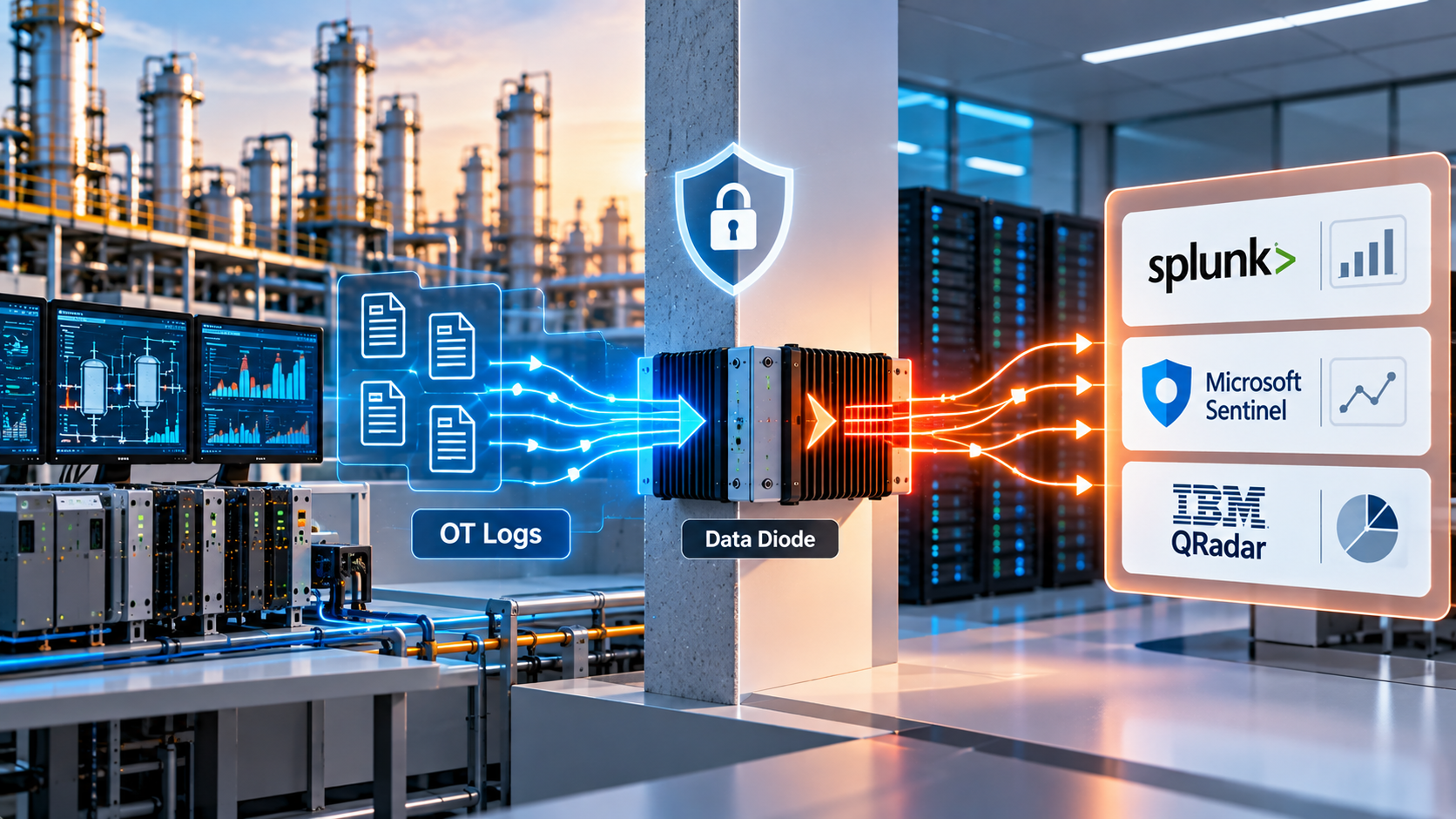
How to Send OT Logs Through a Data Diode to Splunk, Microsoft Sentinel or QRadar

Industrial Cybersecurity Services RFP Checklist: Scope, Deliverables and Vendor Questions