Remote Vendor Access: Can You Prove Who Connected to Your Plant?
Every industrial site grants remote access to people who do not work there. OEMs diagnosing a drive fault, integrators tuning a control loop, software vendors applying a fix at two in the morning so the line runs at six. The access is legitimate, operationally necessary, and in most plants very poorly evidenced.
The test is simple. Pick a date three months ago and ask who connected to your control network that day, from which organization, as which individual, to which asset, and what they did. Most operators cannot answer any part of it. Remote access is consistently among the most common initial access routes in ICS attack vectors, and it is also the one where the evidence gap is widest.
Five controls, in the order they pay off
|
Control |
Why it matters |
|
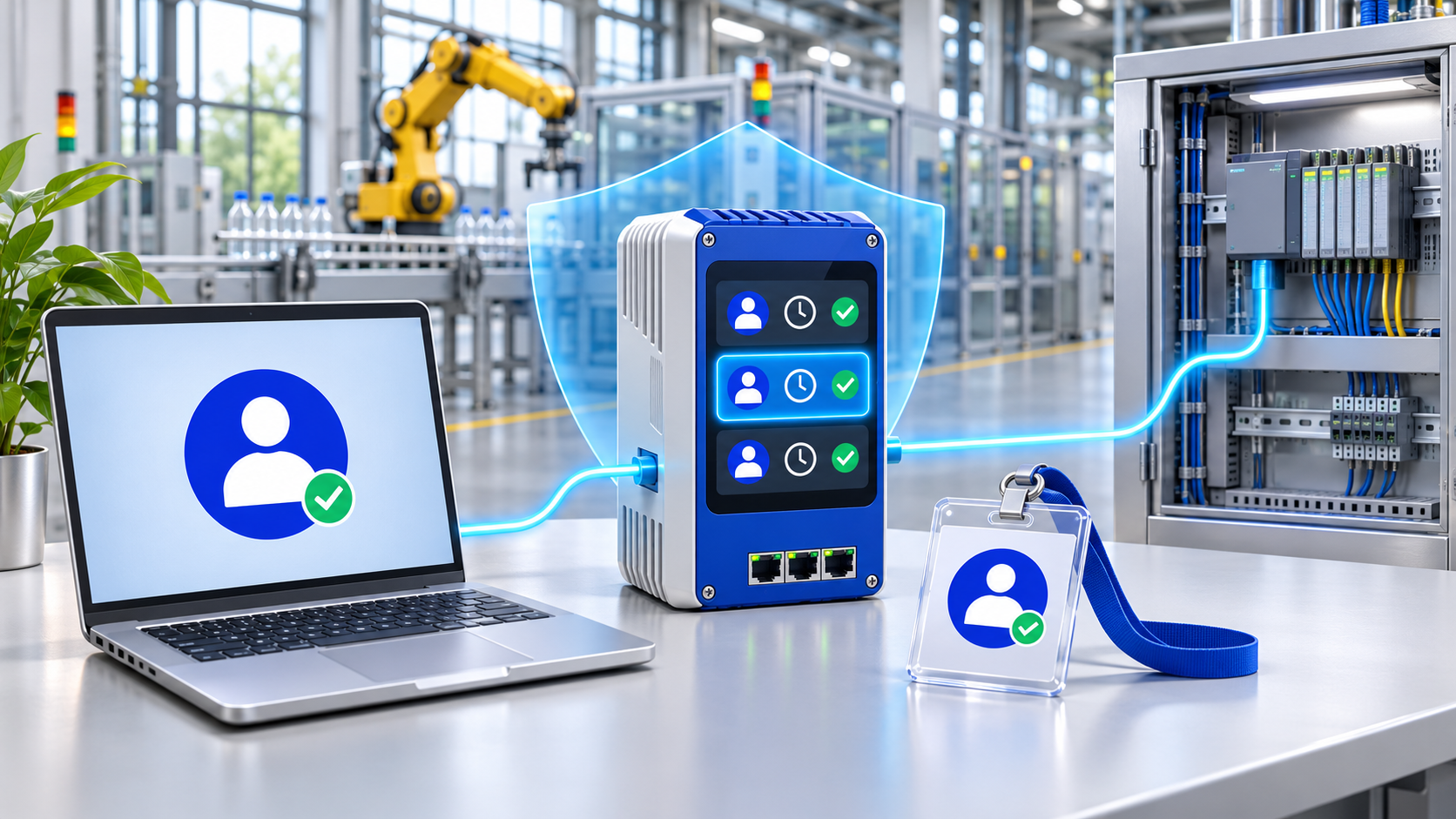
Named individual accounts |
The foundation. A shared vendor account makes every other control decorative, because nothing can be attributed to a person. This is the first thing to fix and usually the cheapest. |
|
Request and approval |
Access requested per engagement and approved by someone at the asset owner, not standing access granted at commissioning and never reviewed. |
|
Brokered connection |
Vendors connect to a broker or jump host under your control, not directly to the asset. This is what makes the next two controls possible at all. |
|
Session recording |
What was done, not only that a connection happened. The difference between a log and evidence. |
|
Periodic access review |
Who still has access and should they. This is where dormant accounts from finished projects surface. |
|
The finding we report most often Standing access. A VPN account issued to an integrator during commissioning, shared among whoever at that firm needs it, still active years after the project closed, with no record of who has used it or when. It is not a hypothetical weakness: if that firm is compromised tonight, the attacker inherits a trusted path into your control network and you have no way to establish what was done with it. Ask how fast you could revoke every vendor path you have granted. If the answer is not minutes, that is the finding. |
Why the obvious architecture is the problem
The default arrangement in most plants is a VPN into the OT network with the vendor then free to reach whatever the network allows. It is simple to set up, it works, and it collapses two things that should stay separate: connectivity and authorization. Once a vendor is on the network, the question of what they may touch is answered by routing rather than by policy.
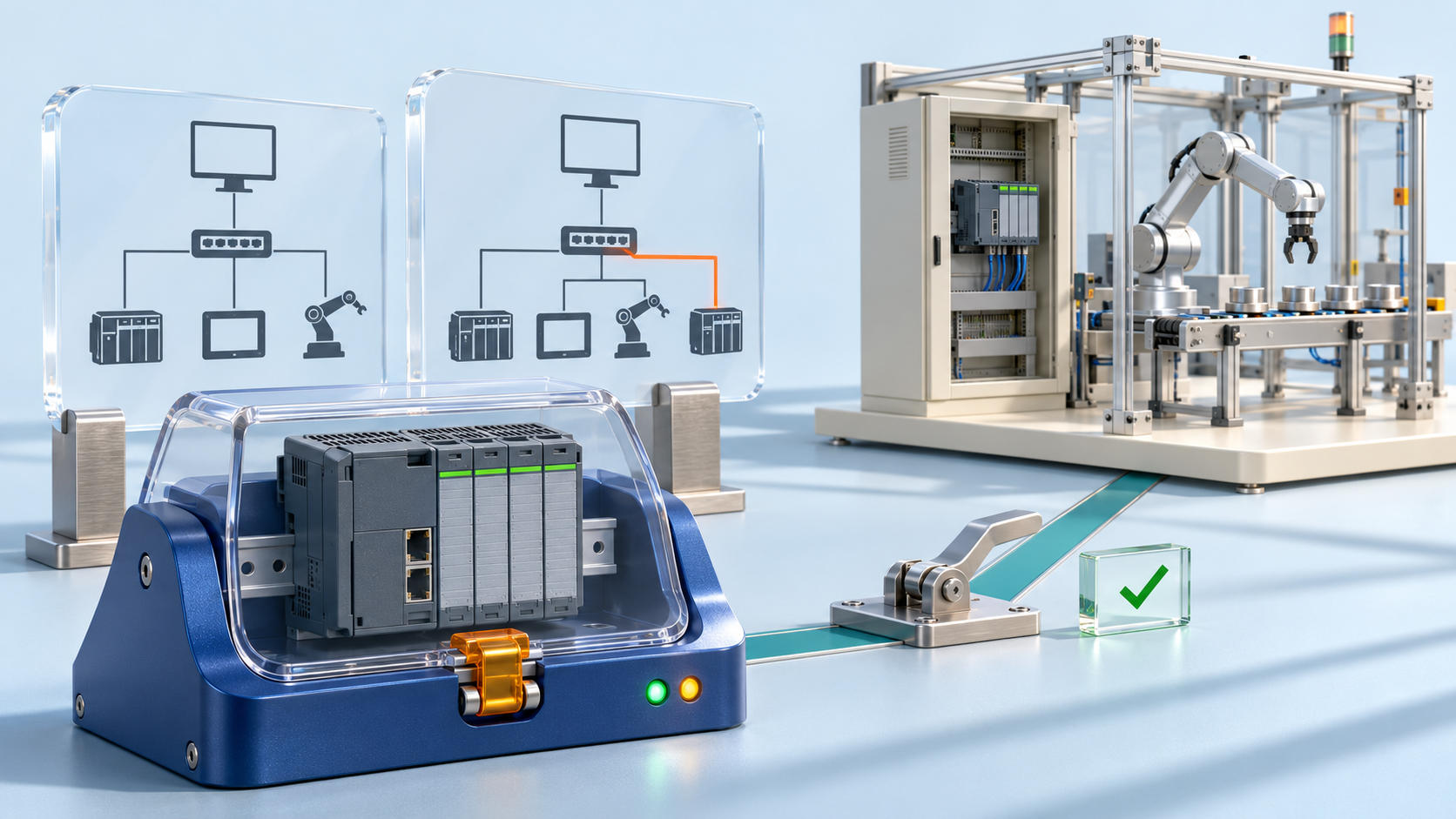
The brokered model separates them. The vendor authenticates to a broker you control, the broker establishes the session to the specific asset for the specific window, and the vendor never holds network-level access at all. That is also what makes session recording feasible, because the session passes through something you own. Our guide to zero trust for OT networks covers the principle and its real limits in industrial environments.
Vendor-supplied remote access appliances
Worth naming because it is common and rarely questioned. Many OEMs supply their own remote access box, install it inside your perimeter, manage it themselves and patch it on their schedule. It solves their support problem elegantly. From your side it is an internet-reachable device inside your network, administered by someone else, which you did not specify and cannot audit.
That is not an argument for refusing it outright, because for some equipment it is the only supported diagnostic path. It is an argument for knowing it is there, knowing what it can reach, and treating it as part of your attack surface rather than part of the vendor's service. Several of these turn up in most asset discovery exercises, which is one reason asset inventory comes before access control.
Evidence an auditor will accept
- A register of who holds access. Organization, named individuals, which assets, granted when, reviewed when.
- Approval records per engagement. Who asked, who approved, what window.
- Session logs or recordings. Retained long enough to support an investigation rather than long enough to satisfy a default setting.
- Evidence of revocation. Leavers and finished projects. Granting access is always recorded somewhere; removing it frequently is not.
- Review minutes. A periodic review that produced decisions, not a report that was generated.
For the full picture of what to assemble before an assessment, see our companion guide on evidence for an OT cybersecurity audit.
Getting there without stopping support
The sequence that works on a running plant starts with attribution rather than architecture. Replace shared vendor accounts with named individual ones first: it requires no new infrastructure, it is hard for a vendor to object to, and it immediately makes every subsequent log meaningful. Then inventory what access exists today, which usually finds more than expected. Then introduce brokering for the highest-consequence assets rather than everywhere at once, and extend it as contracts renew. Finally, set a review cadence and hold it, because the register decays within months otherwise.
What does not work is announcing a new access policy to vendors mid-contract and expecting compliance. Access requirements belong in the contract, which is a question of who is accountable for contractor-managed systems as much as a technical one.
Why Choose Arista Cyber
We assess vendor access as an architecture and contracting problem rather than a VPN configuration, because that is where the exposure actually sits. Our consultants work on live industrial assets and hold functional safety credentials alongside OT security certification, so where remote access reaches a protective system we assess that consequence too. See our OT cybersecurity services and our case studies.
Next Steps
Run the test in the opening paragraph on a real date. Whatever you cannot answer is your scope, and the fastest improvement available is almost always replacing shared vendor accounts with named ones.
Common Questions
What is the biggest risk in vendor remote access?
Standing access with shared credentials. It cannot be attributed to an individual, it frequently outlives the project it was granted for, and a compromise at the vendor becomes a compromise of your control network with no way to establish what was done.
Is a VPN enough for vendor access to OT?
It provides connectivity but not authorization. Once a vendor is on the network, what they can reach is decided by routing rather than policy. A brokered model keeps the two separate and makes session recording possible.
Should we allow OEM-supplied remote access appliances?
Sometimes you have no alternative for supported diagnostics. The requirement is to know the device exists, know what it can reach, and treat it as part of your attack surface rather than the vendor's service.
How long should we keep session records?
Long enough to support an investigation, which is usually longer than the platform default. Set the retention against your incident response and any regulatory reporting obligation rather than accepting what the tool ships with.
What is the cheapest first improvement?
Replacing shared vendor accounts with named individual accounts. It needs no new infrastructure, is difficult for a vendor to refuse, and makes every log you already collect meaningful.
|
Could you prove who connected to your plant last quarter? Arista Cyber assesses vendor remote access end to end: who holds it, what it can reach, how fast you could revoke it, and the architecture and contract changes that make it provable. |
Facing tougher cyber security challenges?
Talk to Arista Cyber about your OT security posture.
Request a consultation